A Survey of AI: Transforming Our Lives
- Overview
- Course Content
- Requirements & Materials
Session Details
Who Should Attend
This course is designed for software architects, engineering managers, product managers, system integrators, and technical leaders responsible for deploying AI capabilities in operational environments. It is ideal for professionals who need to bridge the gap between AI technical capabilities and practical implementation, including those overseeing AI programs, evaluating vendor solutions, or integrating foundation models into existing workflows.

What You Will Learn
- Classify and compare AI system types — classifiers, detectors, generators, trackers, rankers, and agents — against deployment requirements and operational constraints
- Adapt discriminative models (selection, transfer learning, calibration) and generative models (prompt engineering, fine-tuning, distillation) into reliable components
- Design composed AI systems: discriminative detection and tracking pipelines, RAG architectures, agentic systems, and hybrid cross-paradigm patterns
- Allocate decisions between human and AI using autonomy frameworks, and design interfaces that produce calibrated trust rather than overtrust
- Deploy testing, monitoring, and governance strategies to assure AI systems in production
- Apply interpretability, robustness, fairness, and safety engineering to discriminative, generative, and hybrid architectures

How You Will Benefit
- Identify which type of AI system is appropriate for a given operational requirement, and articulate what it will and will not do
- Evaluate whether an AI component is production-ready, based on its interface contract, failure characterization, and monitoring design — for both discriminative models (classifiers, detectors, rankers) and generative models (LLMs, RAG systems, agents)
- Make principled autonomy allocation decisions: what the machine should decide, what the human should decide, and what the interface between them needs to communicate
- Construct or evaluate an assurance argument for a deployed AI system — covering performance, interpretability, robustness, fairness, safety, and governance
-

Grow Your Professional Network
-

Taught by Experts in the Field
The course schedule was well-structured with a mix of lectures, class discussions, and hands-on exercises led by knowledgeable and engaging instructors.
Related Programs

Cybersecurity Certificate
The Cybersecurity Certificate furnishes you with both the strategic and technical knowledge to make your company more secure amidst a growing arena of…

Fault and Disturbance Analysis Conference
This annual conference provides a forum for you to learn about the state of the art in power-systems engineering. You will experience the presentation of…

Introduction to Engineering Mechanics
Engineers are the ultimate problem solvers. This course introduces the principles required to solve engineering mechanics problems. It addresses the…

Introduction to Penetration Testing
As businesses become more dependent on interconnected systems for survival, they recognize a need to train their own personnel in assessment,…

Master of Science in Aerospace Engineering, Online
Reach a level of expertise in one or more of the specialties important to advanced aerospace system design, development, manufacture, maintenance, and/or…

Master of Science in Electrical and Computer Engineering, Online
Get the technical know-how to compete in the high tech industry of computer development. Our master’s degree course work is no different from the project…

Master of Science in Industrial Engineering, Online
Dig deeper into the inherent complexity of our problem domains and the sophistication and variety of our problem-solving methodologies. Learn how to…
Master of Science in International Security Online
The world is constantly changing. From technology and foreign policy to large-scale disasters and stability of the international system, understanding the…

Master of Science in Mechanical Engineering, Online
Dig deeper into the inherent complexity of our problem domains and the sophistication and variety of Learn methods of advanced analysis appropriate for…
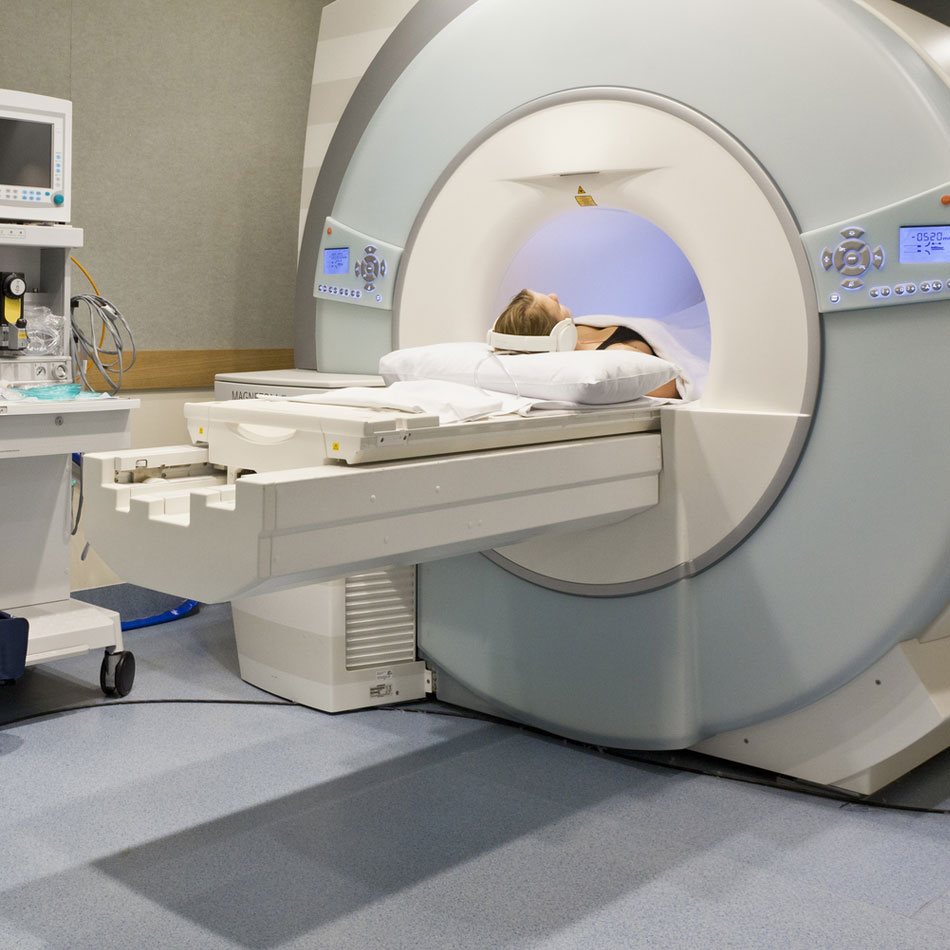
Master of Science in Medical Physics, Online
Medical physics involves the application of physical principles to medicine, particularly in the diagnosis and treatment of human diseases. Learn more »

Master of Science in Operations Research, Online
Learn advanced methods to arrive at optimal or good decisions in complex problems and elicit a best possible solution to a problem mathematically to…

Online Master of Science in Analytics
Georgia Tech’s Online Master of Science in Analytics (OMS Analytics) is a top-5 nationally ranked data science and analytics program. As an…

Online Master of Science in Cybersecurity
Cybersecurity isn’t just about keeping your individual computers and devices safe, it’s about safeguarding our society and our world. Whether that’s from…

Professional Master's in Manufacturing Leadership, Online
Transform your career with our Professional Master's in Manufacturing Leadership (PMML). You'll learn how to propel your organization forward by working…
Protective Relaying Conference
This annual conference provides a forum for you to learn about operational practices and the application of new techniques and devices in protective…