Overcoming Obstacles: One Rescue Mission at a Time
Professional Master’s in Applied Systems Engineering students complete a hands-on project designed to increase efficiency in search and rescue operations.
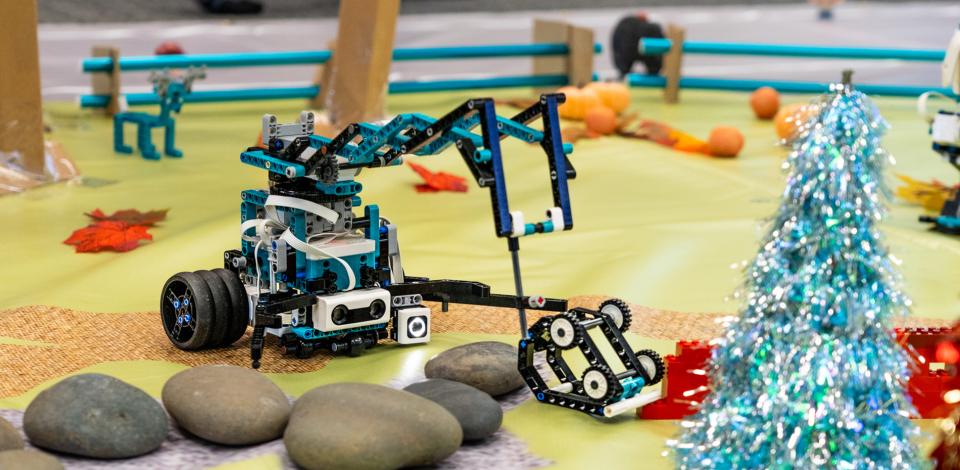
Every year, Georgia Tech’s Professional Master’s in Applied Systems Engineering (PMASE) cohort participates in a timed obstacle assignment designed to test their ability to integrate components into a coherent system and complete a rescue mission against the clock.
A search-and-rescue mission is a structured process that calls for effective coordination, technology, and innovative problem-solving. In 2022, the National Park Service (NPS) conducted roughly 3,400 rescues nationwide, with over 1,000 of these considered lifesaving missions. Direct costs for search and rescue operations are estimated at $6-7 million annually.
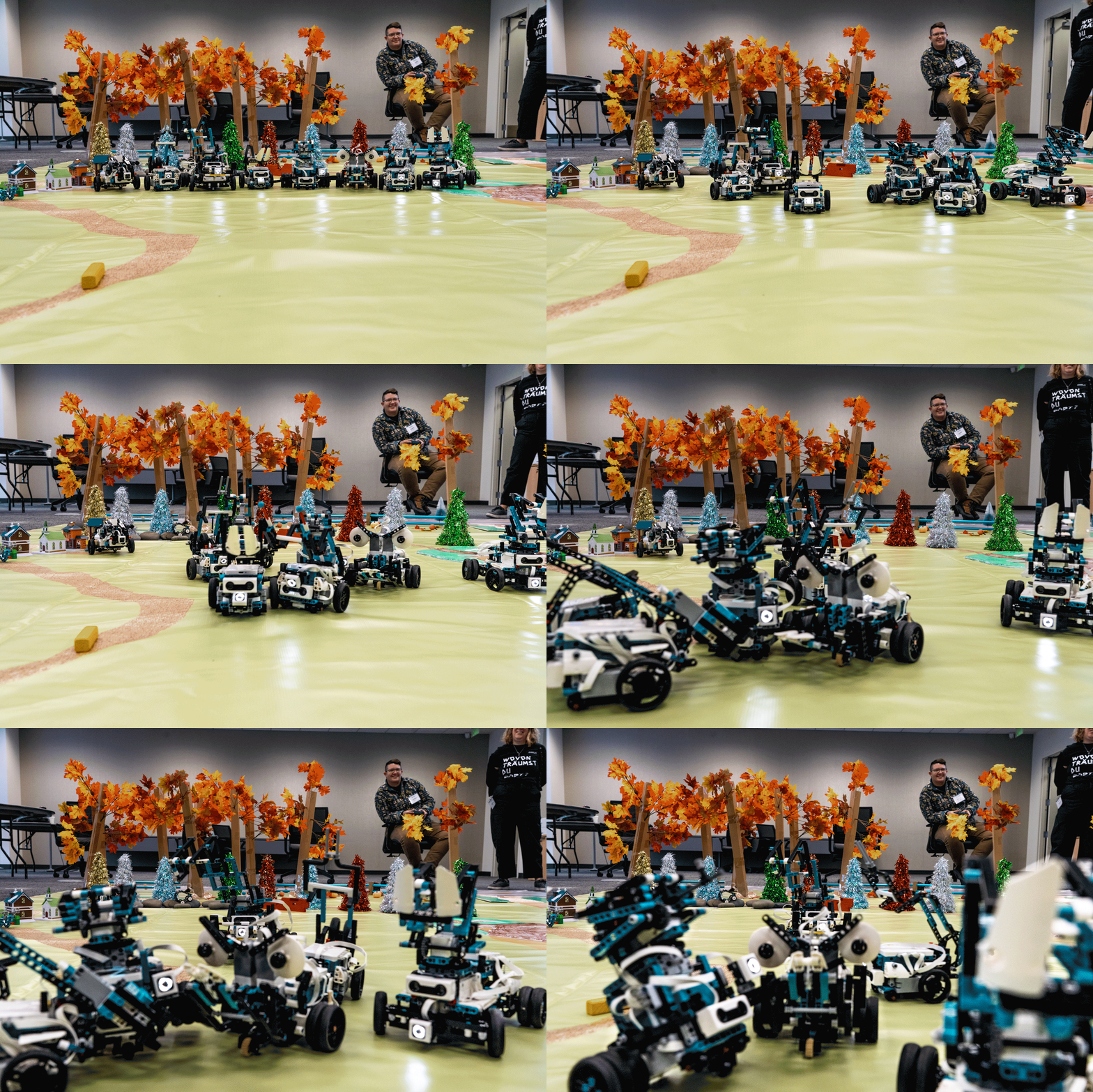
The PMASE program's annual hands-on project challenges learners to design small-scale prototypes of potential technologies to make search-and-rescue operations more efficient and cost-effective. Students spend weeks working in teams designing their robots and preparing for potential obstacles. During the mid-program onsite visits, teams meet in person to build, test, and execute the planned mission to rescue their target and gather information about the terrain.
The Front Runners
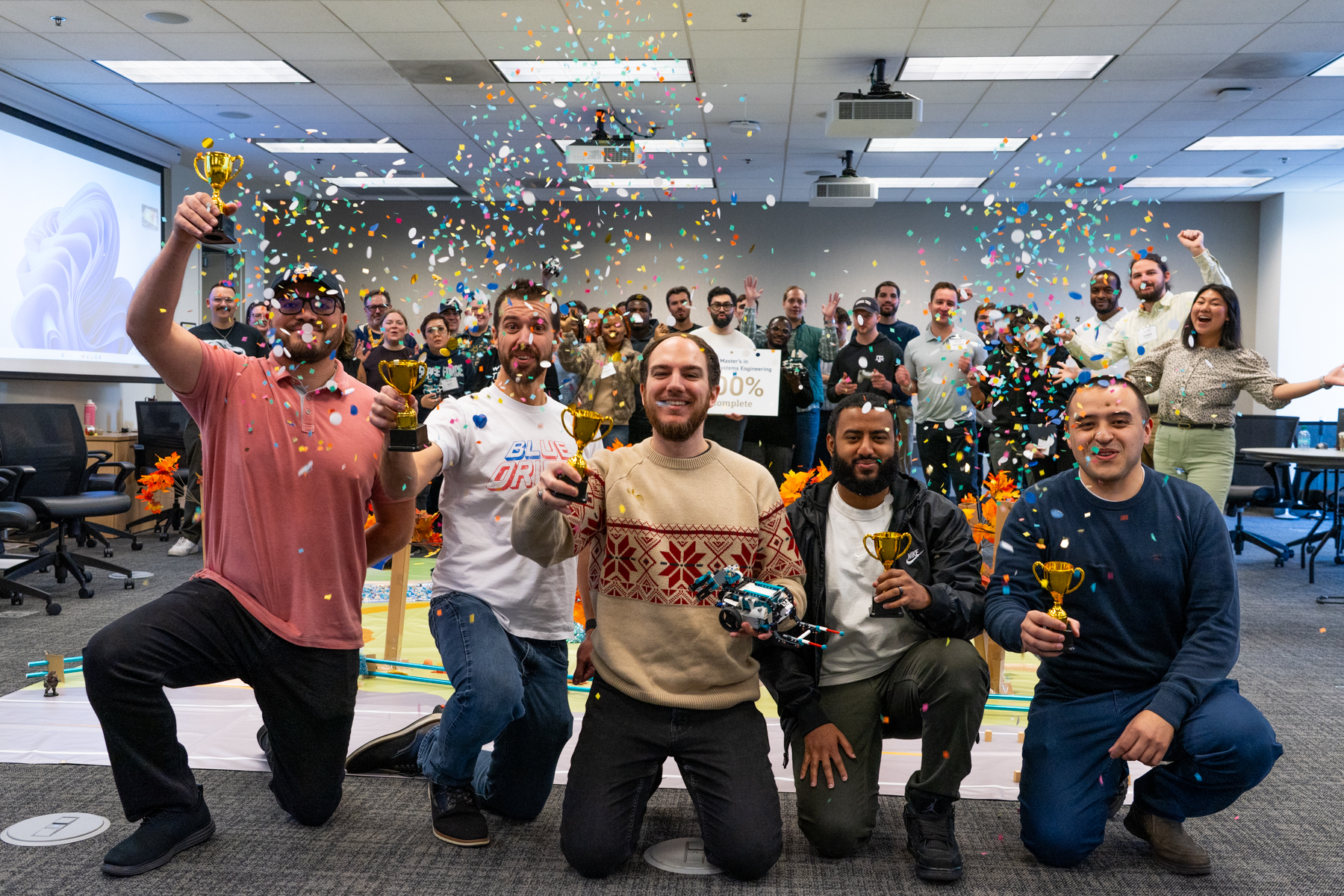
The latest winning team, Systematic Studs, comprised of students from Chile, Texas, Georgia, Florida, and Alabama, shares how they approached the project, how they navigated working across different time zones, and what they enjoyed most about the experience.
A Collaborative Experience
Tyler England: I enjoyed the fact that the project drove out each of our specialties through the system design, the modeling aspect, the onsite work that we did, the test integration, the collaboration, and the software experience to drive a cohesive product. We got to exercise the structured thinking and toolsets that we’ve learned through the program in this project. That was really neat.
Jaime Robles Pardo: I’m proud that we were able to find the best skills of each team player. Our team’s win is proof of how committed we each were to create a quality product.
Jonathan Pernosky: We each showed different strengths throughout the entire project. The one challenge was that all of it was virtual; we all live in different time zones and had to come together to form a model that we could then build onsite. Once we got to Atlanta, everyone got down to work to do their respective activities. We were able to be super-efficient as a team.
From Online to Onsite
Tyler England: Each team member demonstrated serious project management and program execution throughout the semester. We each had pieces of scope that we owned, and the team not only addressed these issues but also drove execution in areas that were lacking.
Jonathan Pernosky: We met in person a year ago when the program started, which helped us build a connection and put faces to names.
Mohammed Yousif: We also made it a point to talk every day via email and chat to make sure everything was getting done.
A Special Shoutout
Tyler England: The cohort leadership has genuine passion and care for the cohort, for the program, and for helping us be successful leaders and successful systems engineers. A big shoutout to Bridget, Jennifer, and Professor Mavris!
Instructor Insights: Analysis that Matters