Instructor Insights: A Hell of an Imagineer
Senior Research Engineer at GTRI and GTPE Instructor Raymond Warner shares his perspective on the power of factorial experimentation and how his background at Walt Disney Imagineering informs his current role.
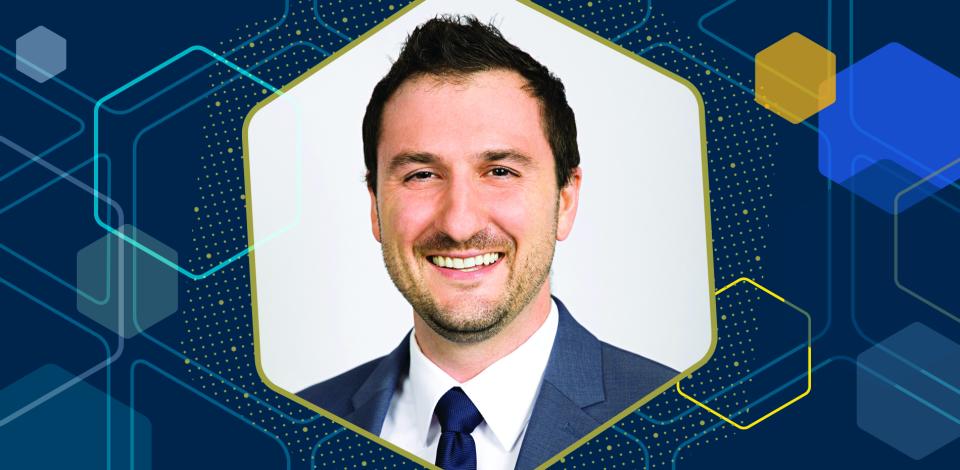
Raymond Warner’s commitment to innovation has been a constant throughout his corporate and higher education career. Over the past decade, he has pushed the boundaries of technology, developed new methodologies, and delivered high-quality results across complex engineering environments.
During his time as senior ride mechanical engineer at Walt Disney Imagineering, the creative organization behind Disney’s global theme park attractions, he led engineering projects from early concept to final testing, gaining deep experience in cross-team collaboration and creative problem-solving.
Now, as a senior researcher at Georgia Tech Research Institute (GTRI), Warner conducts valuable studies ranging from novel sensing platforms to GTRI's satellite program. He also teaches Defense Technology courses as a Georgia Tech Professional Education (GTPE) instructor. He spoke with GTPE about how his industry experience influences his current research, his instructional approach, and the importance of teaching factorial experimentation.
What drew you to GTRI, and how does your current work tie back to your earlier roles?
GTRI’s reputation is well-established across the country. When a position opened up at the Aerospace, Transportation and Advanced Systems (ATAS) Laboratory, I was attracted to the opportunity to work on cutting-edge projects with some of the country’s leading research engineers.
My background in custom ride systems and world-renowned attractions prepared me to look for innovative solutions to challenges across various disciplines. My work at GTRI has broadened my scope of expertise substantially and increased my confidence as an engineer. I’ve also continued to benefit from my foundation at Walt Disney Imagineering, bringing my program management, teamwork, leadership, and problem-solving skills to the Institute.
What is the focus of your research for GTRI?
I’ve been fortunate to explore a very broad range of research interests at GTRI. My work in small satellite development and large threat radar systems has been an excellent opportunity to stretch my design and programmatic skillset. My research in miniaturized, ultra-sensitive chemical biosensors allows me to work at the cutting edge of emerging technologies.
Over the last few years, I’ve also been teaching factorial experimentation, which has been long neglected by many colleges and universities at the undergraduate and graduate levels. I decided several years ago to expand the use of factorial experimentation by teaching it to technical professionals, and I have received very positive feedback about how the class expands their confidence in understanding complex systems.
Tell us a little bit about your teaching style. What experience can learners expect in your courses?
I employ a dynamic, engaging teaching style in my courses that involves a lot of interactive participation by the students. I use storytelling in my presentation of engineering concepts to appeal to a variety of professionals and keep students interested in the content. Using the Socratic method and in-class experimentation, students get to not only learn but also practice newly acquired skills in real time.
You lead the Design of Experiments (DOE): Introduction to Experiments I and Design of Experiments II: Advanced Topics to Make You an Expert Experimenter courses, which explore the power of factorial experimentation. What sets this method apart from other forms of experimentation, and what are some examples of successful use cases inside and outside of the defense sector?
Any experiment that changes only one variable at a time is squandering valuable resources – most especially time. We live in a world overflowing with interconnected knowledge and technical professionals. Now more than ever, we need a smarter, faster way to uncover deeper insights, optimize conditions, and drive innovation at lightning speed. I have found that factorial experimentation transforms how professionals approach complex systems and gives them the confidence to know what the next best steps are.
I recently read of a case study whereby a pharmaceutical company was developing a new tablet formulation and needed to optimize three different responses simultaneously. The company used a traditional one-variable-at-a-time approach but failed to identify key interactions between factors, resulting in sub-optimal formulations and much more prolonged development time.
When the company learned of factorial experimentation, they implemented the techniques and, in a matter of 8 experimental runs, assessed not only which main effects were responsible but discovered the all-important factor interaction – a relationship between factors influencing the response. This interaction is impossible to detect in traditional one-variable-at-a-time (OVAT) approaches – but factorial experimentation solved the mystery!
What has been your proudest or most rewarding experience as a GTPE instructor for the GTRI professional development courses you lead?
In almost every course that I have taught, the overwhelming response has been the question, “Why have I never been taught this before?” It is exciting to empower students with valuable information that should be taught in all undergraduate technical programs but isn’t. Seeing students engage with the content and apply it to their specific projects and problems makes the teaching experience worthwhile. I hear from previous students regularly who report back with their stories of successful implementation of DOE techniques in their workplaces, allowing them to innovate faster, resolve problems more easily, and reap the benefits of all that DOE has to offer.
Instructor Insights: Analysis that Matters