Cybersecurity in the Age of AI: Seeing the Big Picture
Cybersecurity isn’t just for tech experts or IT departments.
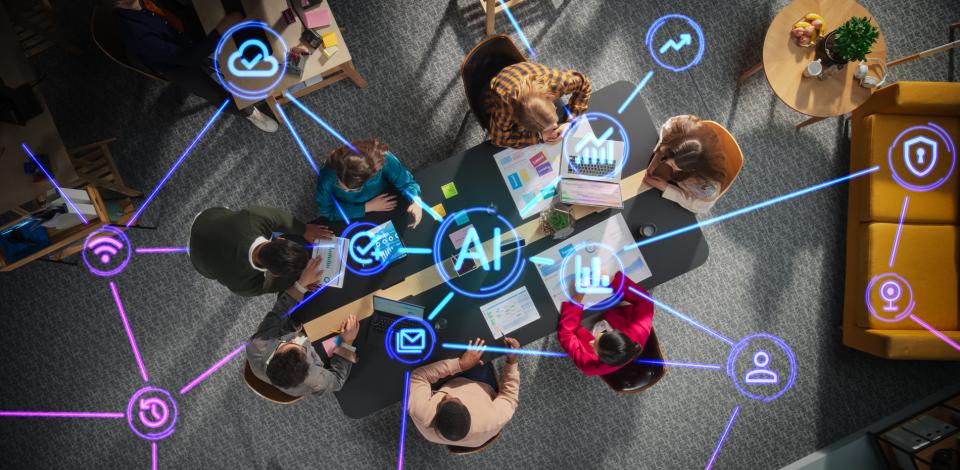
Emerging technologies such as artificial intelligence are constantly reshaping essential aspects of our personal and professional lives. From using voice assistants to control smart-home devices to streamlining workplace processes, AI has shifted priorities while increasing exposure to the risks of an interconnected world.
The FBI’s 2025 Internet Crime Report revealed that cyber-enabled crimes defrauded Americans of nearly $21 billion, with cryptocurrency and artificial intelligence-related complaints among the costliest. Once a topic reserved for specialists, cybersecurity has become a shared responsibility that affects people, organizations, and critical infrastructure alike.
Security in an Interconnected World
Bad actors targeting critical infrastructure, such as power grids, transportation systems, or water systems, remain a major concern for cybersecurity experts like Saman Zonouz, director of the Online Master of Science in Cybersecurity (OMS Cybersecurity) Cyber-Physical Systems track. In 2025, the U.S. Cybersecurity and Infrastructure Security Agency (CISA) reported triaging more than 30,000 incidents through its operations center to protect critical infrastructure systems.
“Adversaries are quietly pre-positioning inside these networks, and the most dangerous attacks are designed to look normal.”
In a recent paper, Zonouz and his team showed that malware hidden in an industrial controller's built-in web interface can falsify sensor readings and disable safety alarms while taking control of the physical machinery.
“As AI moves into monitoring and control, it becomes one more target attackers can manipulate,” he said.
Critical systems are not the only ones at risk. Organizations across every sector are vulnerable to financial loss, reputational damage, and the weakening of customer trust. Instead of focusing on isolated components or threats, cybersecurity professionals must understand how people, processes, and technologies interact across entire systems. For Zonouz, systems thinking, which involves designing engineering systems with resilience built in, should be a priority as organizations continue to adopt AI.
“AI can flag anomalies at machine speed, but a person still has to understand the physical process well enough to know whether an alert makes sense and what a response will actually do to the system.”
Looking ahead, Zonouz predicts the highest demand will be for those “who can bridge engineering and security and resilience by combining information technology (IT) and operational technology (OT) expertise, challenge AI outputs instead of simply accepting them, and make sound decisions under pressure with incomplete information.”
The need for this holistic approach expands beyond physical systems. Individuals must approach emerging tech with both curiosity and responsibility.
The Human Side of AI
Millions of professionals across industries are exploring ways to leverage AI capabilities to generate ideas, improve productivity, and analyze data.
Gallup reports that more than half of U.S. employees now use artificial intelligence on the job. The reasons for integrating AI technology vary; however, productivity and efficiency remain the top motivators.
Although this new technology offers exciting benefits, experts warn professionals against confusing ease of use with safety.
“Professionals have been known to paste sensitive data, proprietary documents, client information, or internal communications into AI systems without understanding where that data is stored, processed, or shared,” says Tim Brown, academic program director for AI at Georgia Tech and research faculty with Georgia Tech Professional Education and Tech AI.
As humans continue to lean on new technology to recognize patterns and automate routine tasks, they must equally rely on their critical judgment and emotional intelligence. Brown believes those who use AI technologies must remain accountable.
“Organizations need clear governance policies, but individuals also need to practice good judgment. Just as we learned not to click every link in an email, we must learn what information should never be shared with an AI system."
Preparing for What’s Next
Cyber threats are becoming more sophisticated and far-reaching. AI has enabled cybercriminals to scale attacks and improve their abilities more quickly than ever before. Securing sensitive data means safeguarding personal information, such as access to bank accounts, and protecting essential resources such as electricity and clean water.
Securing these sectors will require not only advanced technology, systems thinking, and continuous education, but also uniquely human capabilities.
“The value comes not from replacing human expertise, but from leveraging AI’s capabilities to free humans to be 'more human' and focus on strategic thought and creative problem-solving,” says Brown.
For organizations, staying prepared means assuming they will be targeted. “Prepared organizations know what devices are connected to their systems, train their engineers and operators as well as their IT staff to respond to cyber threats, and practice how they will continue operating safely if a digital system, including an AI tool, fails or is compromised,” Zonouz says. He reiterates the goal is not to build a bulletproof system, but a resilient one.
The Future of Works Starts Today
Building knowledge is essential to understanding today’s cyber threats and maintaining resilience as the labor market continues to shift. If you’re unsure where to begin, consider exploring Georgia Tech’s Cybersecurity Certificate, Online Master of Science in Cybersecurity, or our newest interdisciplinary degree, Online Master of Science in Artificial Intelligence, launching in 2027.
AI’s Role in Project Management