Ideas Worth Reading: Our Suggestions for Your Bookshelf
The Professional Education community shares a collection of books that challenged, inspired, and entertained them this year

This year, Professional Education's faculty, instructors, and students not only investigated a wide range of ideas in the classroom, but also outside it during their free time. Many members of the community read books that lingered in their minds long after they finished the last page. Below are recommendations from our collective bookshelf, with texts involving public-health histories, speculative fiction, organizational safety frameworks, and the mathematics behind modern AI. These recommendations are shared here for learners to explore the titles that have challenged, inspired, and reshaped the way our community thinks about its work.
Everything is Tuberculosis
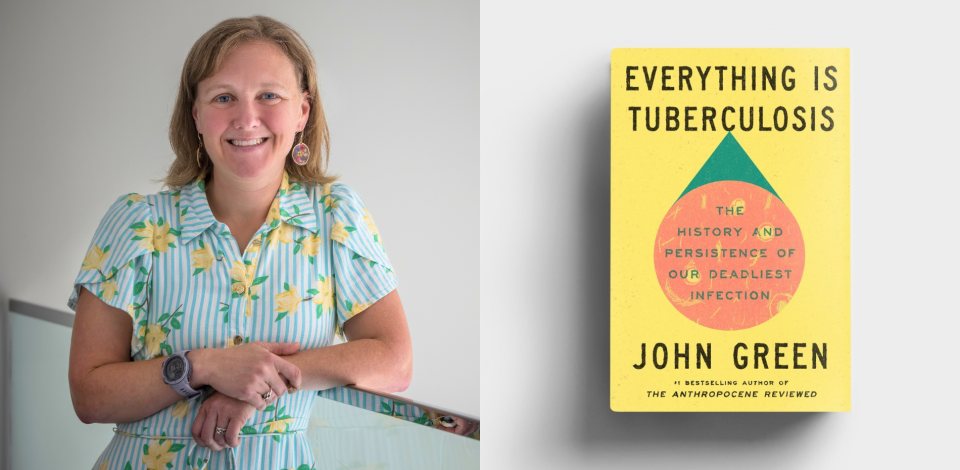 Safety and Health instructor Jenny Houlroyd recommends "Everything is Tuberculosis" by John Green as a thoughtful read for professionals both within and beyond the Occupational Safety and Health industry.
She notes that, "the book 'Everything is Tuberculosis – The History and Persistence of our Deadliest Infection' by John Green is a quick, approachable read, but it left an impression on me that will last a long time. Now, more than ever, as we see massive shifts in public health and occupational health infrastructure (in particular the National Institute of Occupational Safety and Health), it is so important to remember that yes, indeed, everything is tuberculosis. But what does that even mean?"
Just Culture
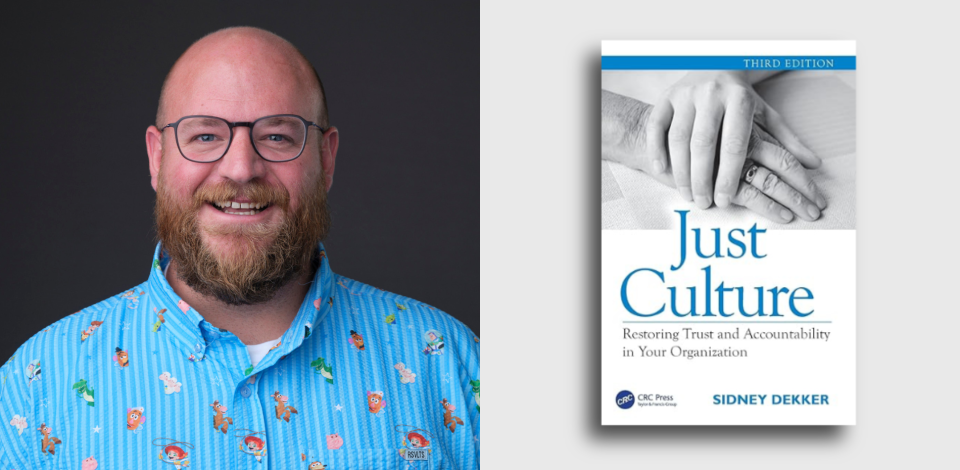 Safety and Health lecturer Christopher Clanton recommends "Just Culture," a thought-provoking read for safety professionals and organization leadership.
Clanton says that how we respond to failure can be just as important as how we plan for success, and that’s why he recommends this powerful read by Sidney Dekker. "Dekker, a former pilot and safety expert, explores how organizations can create environments where learning from mistakes is not only possible but expected. While his work is rooted in aviation and safety science, the lessons in this book resonate deeply with anyone working in complex, high-stakes systems," he notes.
The Diamond Age & Anathem
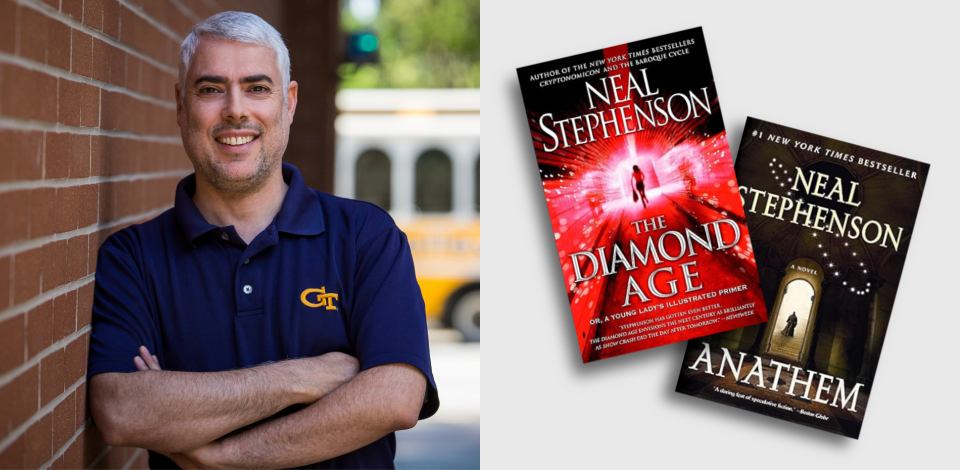 Online Master of Science in Analytics director Joel Sokol recommends an author's two fictional futuristic reads for professionals seeking thought-provoking ideas around AI and Education.
"Known for his works of speculative fiction, I’m recommending two of Neal Stephenson's adventure stories, 'The Diamond Age' and 'Anathem,'" Sokol says. "Both are enjoyable reads and stand out to me because of the element of futurism — in each book, Stephenson intricately immerses the reader in a future of his making. Stephenson weaves together themes of nanotechnology and distributed computing in 'The Diamond Age' (with some XR design and other topics thrown in), as well as globalized cultural structures, AI-directed learning, and the differences between learning solely from an AI, solely from humans, and a mix of each. My other recommendation, 'Anathem,' is the only adventure novel I can recall that contains a geometric proof!"
Apple in China
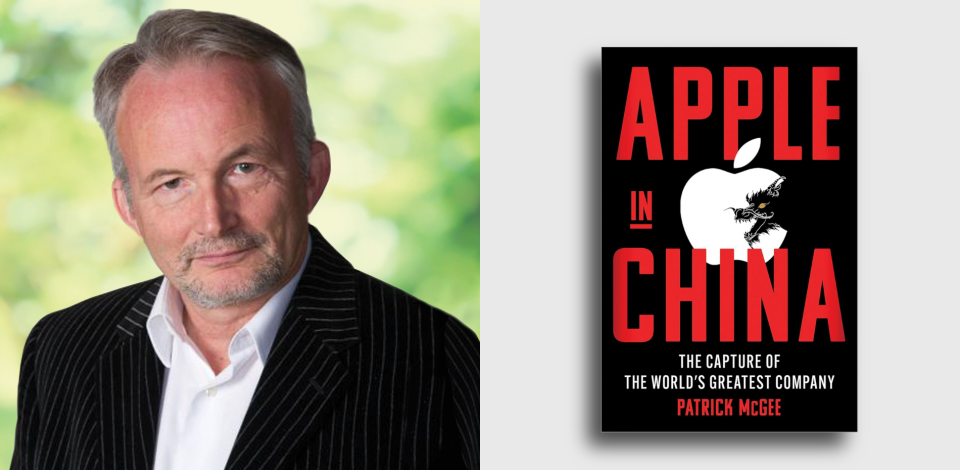 Online Master of Science in Cybersecurity policy
track Milton Mueller recommends
a compelling read on the development of Apple's globally distributed supply chain and how
its foray into China impacted the ongoing U.S.-China tech war.
"With 'Apple in China: The Capture of the World’s Greatest Company,' Patrick McGee has written a splendid business history that also manages to wade into geopolitics, sometimes in a misguided way," Mueller says. "The book’s underlying focus is the transnational division of labor that evolved in the digital industries, specifically the relationship between Apple and China. The bulk of the book documents the powerful techno-economic logic that led to the development of Apple’s distributed supply chain, and why and how it became concentrated in China."
Better
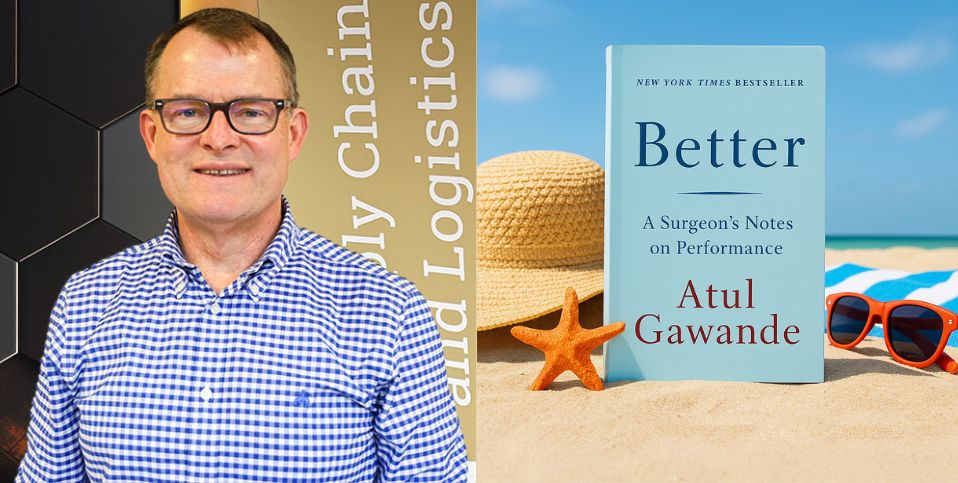 Managing Director of the Georgia Tech Supply Chain and Logistics Institute Chris Gaffney recommends "Better," which he says resonates with the work supply chain professionals do every day despite the book's focus on the challenges of delivering better outcomes in medicine.
"As you read Atul Gawande's 'Better,' it becomes clear that the insights he shares transcend healthcare," Gaffney says. "In fact, many of them connect deeply to the work we do in supply chain. Health care, after all, is a complex supply chain in itself — one that must manage the flow of goods (medicines, equipment) and services (diagnosis, surgery, therapy) under conditions of great uncertainty and high stakes. Gawande’s work reminds us that the principles that drive improvement in medicine are the same ones that drive improvement in supply chains, manufacturing, transportation, and just about every field where people are trying to do things better every day."
Why Machines Learn
 Joe Domaleski, an OMS Analytics student, recommends “Why Machines Learn: The Elegant Math Behind Modern AI” by Anil Ananthaswamy, calling it “an accessible look at the mathematics that powers today’s AI systems.”
In “Why Machines Learn,” Ananthaswamy explores foundational concepts in machine learning like probability, optimization, and information theory, and “traces how these concepts underpin algorithms from linear regression to deep learning.” Domaleski read the book while taking ISYE 6501 with Professor Sokol and found it to be more than just a supplement to the course. He says he was inspired by the “beautiful” way Ananthaswamy “wove together historical context, philosophical questions, and scientific rigor to explain the ‘why’ behind the ‘how’ of machine learning, instead of diving straight into the equations.”
Storytelling with Data
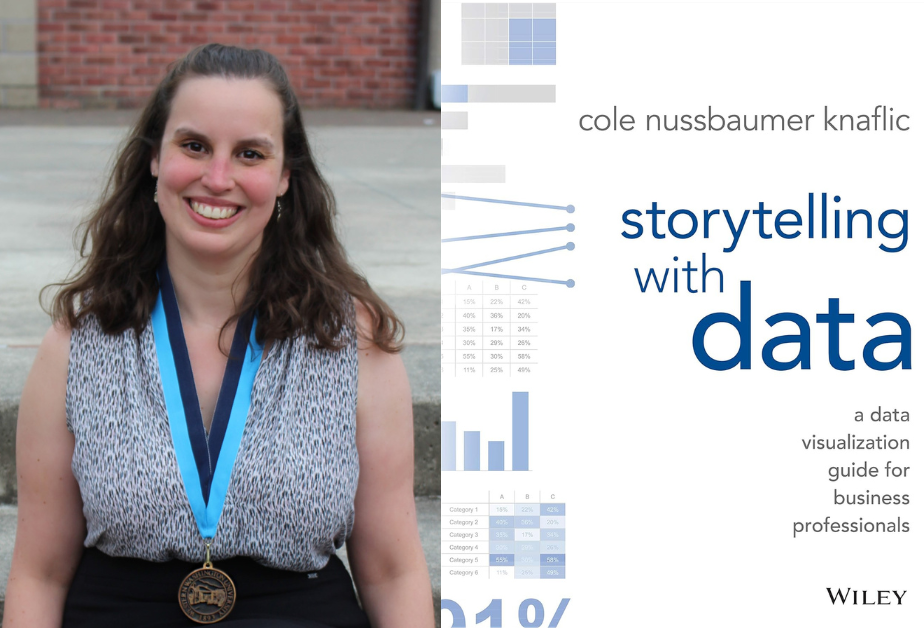 OMS Analytics student Talisa
Manker recommends "Storytelling with Data: A Data Visualization
Guide for Business Professionals"
by Cole Nussbaumer Knaflic, a book she discovered while researching the creation of dashboards.
"I thought I would skim through it to get the highlights but ended up reading the entire book because it was so interesting and well written," Manker says. "It has great tips about creating effective visualizations with helpful illustrative examples. It also has great advice for using your data to get a point across to your audience — telling a story through data. On top of that its a quick easy, read and available online for free through the Georgia Tech library."

Communicating Across Generations