Work Has Feelings, Too: What’s Your Career Love Language?
The ways you feel supported — and support others — on the job can improve performance, growth, and employment longevity

February is full of talk about love and how it’s expressed. At home, when you want to express love, it may be through words, gifts, or time together. Something not often considered is that we don’t stop being human when we leave the house — people still want to feel valued, supported, and understood.
It turns out that the workplace has love languages, too.
These ideas show up in surprisingly practical ways when stepping into the workplace: a manager who coaches you, a teammate who helps conquer a workload pile up, or access to a course that builds your skillset.
The ways you feel supported — and support others — on the job can shape performance, growth, and employment longevity. When your workplace speaks your love language, you are armed for success.
So, what work love language resonates with you?
Words of Affirmation → Recognition that Matters
Some individuals find encouragement to be as effective an energy boost as coffee.
Thoughtful feedback, public kudos, or even a simple Teams message saying, “great job on that today!” are all small ways that supervisors can show their team that they are seen.
Every bit of recognition builds confidence, reinforces impact in the workplace, and helps workers understand how their efforts contribute to the bigger picture. Feeling seen often becomes a breeding ground for professional growth.
"Communicating appreciation helps motivation and morale because it makes people’s work visible and meaningful, especially in environments where effort is often distributed, collaborative, and not always immediately rewarded," Language Institute Director Katherine Samford says.
"In teams with diverse backgrounds, a shared language of appreciation can be as simple as 'please' and 'thank you,' but also can be spoken through listening attentively, acknowledging and celebrating differences, and offering support when needed," she continues, adding that not all expressions of appreciation are through words: "I also find that food is the universal language of love!"
For professionals whose motivation is tied to feeling seen, finding environments where feedback is frequent, wins — large and small — are celebrated, and leaders acknowledge effort as well as outcomes is critical to their workplace success.
Acts of Service → Collaborative Support
Being a valued teammate is oftentimes important to individuals who prefer partnership to praise.
These individuals value managers who remove roadblocks, coworkers who step in to help, and workloads that recognize realistic capacity. They do their best work when the team truly works together and not in silos.
"Servant leadership is perhaps one of the most underrated 'love languages' in the industry today," Academic Program Director of Project Management Chris Carter says. "Whenever a leader prioritizes the team member's development needs, removes a barrier to success or is willing to lend an expert hand in managing a critical project risk, that is precisely when that leader is showing 'love' to that team member.
"Oftentimes the most loved leaders are the ones in the organization that consistently motivate their teams with such servant-like actions," he adds, noting he personally strives to serve his own team in that way.
Those who appreciate collaborative support recognize that great work rarely happens alone, and that shared effort yields shared success.
For professionals who prioritize community, support from colleagues and leadership helps them focus, find solutions, and deliver results.
Receiving Gifts → Investment in Growth
Many professionals are wired for progress. They are bookmarking conferences, saving emails about new programs, and always asking, “What’s next for me?”
For those individuals, a thank you is fine, but a more meaningful gift is the gift of opportunity through access to new tools, educational funding, or a subscription to a learning platform.
This love language can be especially beneficial to employees as industries rapidly change, making growth mandatory.
For this group, having managers and organizations that are willing to invest in their continued development is one of the most meaningful gifts they can receive — and one that can help industries retain talent and lead innovation.
Quality Time → Intentional Mentorship
Some people don’t want to join a workplace and start earning credentials right away — they need to have a conversation first.
Professionals who value quality time appreciate one-on-one meetings with their supervisors that delve deeper than status updates, mentors who challenge them, and building a board of directors to assist with big career decisions.
These members of the team believe that receiving time from colleagues and leadership are the most powerful ways they can be supported. Working with individuals who invest attention, listen, and offer guidance instead of directives builds confidence and clarity in their skills and what is expected of them.
For colleagues who value quality time, professional growth comes through dialogue that yields better understanding and helps them see ways to open doors in the workplace.
Physical Touch → Belonging and Safety
When people feel safe — physically and mentally — they learn to assess risks and make smart decisions.
Managers see people share ideas, show up fully and improve performance when they feel like they belong. In fact, feeling safe at the workplace arguably comes from managers who invest time in ensuring that all the types of workplace love languages are tended to.
Feeling aligned with culture, trusting the team, and knowing you are respected in the workplace ensures a sense of safety that is even bigger than the individual.
"When workers experience a culture of comfort — or psychological safety — they become empowered to be proactive instead of being reactive," says Occupational Health Group Manager for Safety, Health, Environmental Services Jenny Houlroyd. "Not being afraid to speak up shifts the culture, leads to prevention and responding to leading indicators instead of triaging a response to lagging indicators."
For those who thrive in workplaces focused on ensuring safety, this sense of connection makes a difference between having a job and thriving at a career.
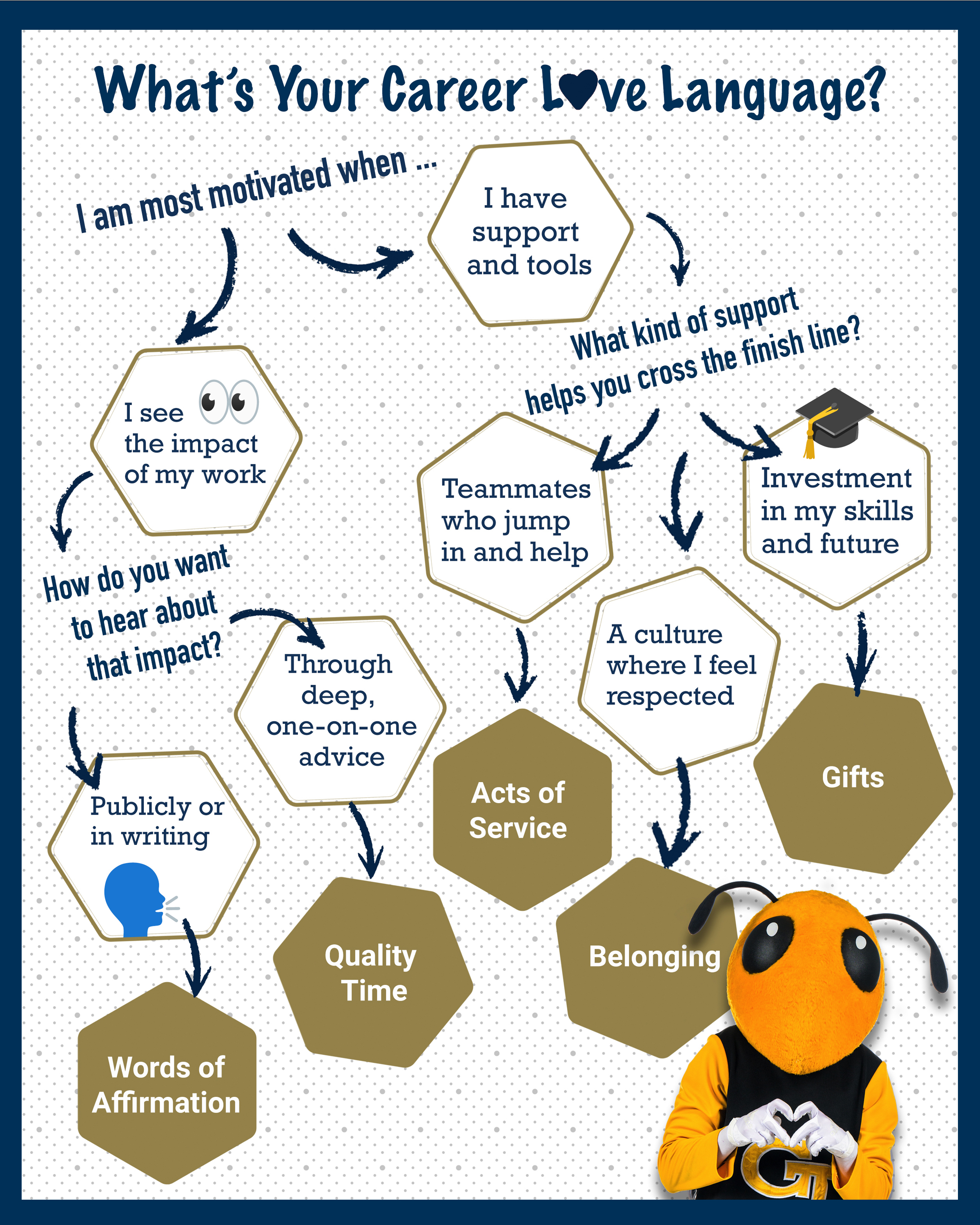
How Can Understanding Love Languages Create a Better Workplace?
Just like with personal relationships, many people can see themselves in more than one workplace love language. Most people are really a mix of two or three, which is an important caveat to remember.
Support — either as a manager or a member of a team — is not one-size-fits-all. Understanding what fuels you and others can help you and your organization make smarter decisions about your professional development, team, workplace, and industry. Some individuals want mentorship and community. Others want hands-on opportunities and access to credentials. Both paths can lead to meaningful growth.
Taking time to learn what matters to you and your colleagues can help build stronger trust, better communication, and a culture where individuals feel seen, supported, and motivated. When professionals feel valued in the ways that matter most to them, workplaces can see improved performance and increased collaboration — and workplace growth becomes something teams pursue together, benefitting everyone.

Communicating Across Generations