Foreign Policy: Definition and Examples
What is Foreign Policy? Discover how global decisions influence security, diplomacy, and conflict prevention.
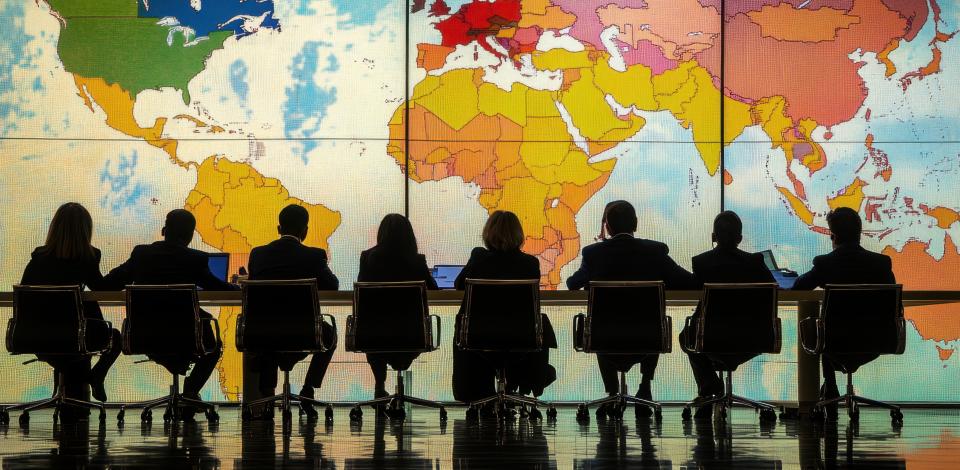
The economic strength and military capacity of the United States grants the nation significant diplomatic influence. This allows the U.S. to shape the decisions of other countries without relying exclusively on military force.
Foreign policy leverages this influence to promote widespread stability while supporting national interests. Achieving these goals requires a careful blend of diplomatic and economic strategies, complemented by military power.
What Is Foreign Policy?
Foreign policy refers to the strategies and decisions a nation uses to manage its relationships with other countries and international organizations. It encompasses diplomacy, trade agreements, security alliances, humanitarian efforts, and even cultural exchanges. At its core, foreign policy reflects a country’s values and priorities, guiding how it protects national interests, promotes economic growth, and maintains global influence.
Because every nation operates within a broader international system, foreign policy also plays a key role in addressing shared challenges such as climate change, security threats, and global health. While the specific approach may vary, the goal is the same: to shape international conditions in ways that support stability and long-term national objectives.
Key Goals of Foreign Policy
Though we’ve provided a specific foreign policy definition, it is important to understand its influence by recognizing its guiding missions and objectives. These can vary between nations and may be prioritized differently depending on current events or other factors, but a few core goals take precedence:
National Security
National security represents one of the most recognizable objectives of foreign policy. This involves national efforts to defend citizens against internal and external threats. Sometimes referred to as "national defense," this embodies military forces capable of defending the homeland and deterring aggression, along with intelligence gathering so threats can be proactively identified and addressed.
Fulfilling a primary national interest, national security requires many federal agencies and intelligence units to keep data, infrastructure, and entire communities safe from adversaries.
Economic Interests
In an increasingly global economy, we rely on foreign policy to cultivate a stable international environment in which trade can flourish while supply chain disruptions are minimized. A strong and economically-oriented foreign policy can boost export opportunities as well as expand access to raw materials. As the Insurance Information Institute's Dr. Michel Léonard explains, foreign policy can also have a drastic effect on domestic consumer confidence, with weak foreign policy contracting consumer demand at the same time that businesses "lose access to a significant share of that global market."
Humanitarian Concerns
Humanitarian crises occur when an event (or series of events) places the health, safety, and well-being of vulnerable communities in jeopardy. Examples include:
- Natural disasters
- Industrial accidents
- Epidemics/pandemics
- Armed conflicts
The Humanitarian Coalition states that, while the causes can vary, crises qualify as humanitarian when "survivors are left in urgent need of life-saving assistance such as shelter, food, water and health care."
Humanitarian concerns should play a central role in shaping foreign policy. When guided by the principle of human dignity, foreign policy supports rapid and morally grounded responses to devastating events, ultimately alleviating suffering. It can also contribute to long-term solutions and may even encourage nation-states to maintain high standards surrounding human rights.
Global Stability
At the international level, strategic stability emerges when "interstate violence is substantially nonexistent and where there is little likelihood of this condition changing unexpectedly to any significant degree," according to RAND.
This is desirable not only because it limits the likelihood of war (and accompanying humanitarian crises) but also because nations are better equipped to focus on economic growth when global conditions feel predictable. Foreign policy contributes to stability via diplomatic dialogue and strategic alliances, which may limit tension while contributing to widespread norms that promote peace over conflict.
Ideological Promotion
Many nations are not content to promote core ideologies exclusively within their own borders. Through foreign policy, they aim to influence international systems so that they align better with the given nation's central values.
This effort is closely tied to "soft power," described by the Saskawa Peace Foundation as the "ability to influence others through attraction rather than coercion or payment." This derives not only from the nation's policies but also from its culture and its political values.
Types of Foreign Policy Strategies
Foreign policy relies on a layered approach, where numerous strategies coalesce to advance national interests at the global level. While each area serves a distinct purpose, they all can contribute to the broad objectives highlighted above.
The overarching approach to these strategies may be classified as unilateral or multilateral. The Council on Foreign Relations (CFR) defines multilateralism as the effort to "work together with other countries … to more effectively tackle transnational challenges." This is essential when complex issues call for collective action.
Meanwhile, unilateralism encourages nations to focus on their own unique foreign policy goals. CFR clarifies that this "does not necessarily mean countries advance their goals while disregarding other countries." These solutions should not be viewed as either-or but rather as complementary options that can be pursued according to the challenges at hand. These strategies can be further broken down into the following categories:
- Diplomatic: Centered on purpose-driven negotiations, diplomatic strategies exhibit how simple dialogue, and cooperation can help yield positive relationships with other nations. This comprises not only treaties and alliances but also voluntary participation with international organizations (such as the United Nations).
- Economic: Foreign economic policy uses financial tools to influence global decision-making either by encouraging cooperation through trade agreements that foster mutual dependence and reduce conflict, or by applying pressure through sanctions and tariffs that penalize adversaries. While these strategies can promote commerce and deter aggression, they also carry risks, including potential retaliation and heightened tensions.
- Military: The threat of armed force can prove both powerful and risky from a foreign policy perspective. This strategy begins with developing strong military forces, including branches such as the Army or Navy. These forces can function as a key deterrent even in times of peace, indicating the willingness of well-protected nations to defend their best interests. Defense pacts like the North Atlantic Treaty Organization (NATO) help establish a reliable means of collective security with ally countries. Military interventions are typically regarded as a last resort, leveraged only when alternative diplomatic or economic strategies have fallen through.
Foreign Policy Examples
Foreign policy can take many forms, from rebuilding alliances to shaping trade and security. In the United States, examples include the Marshall Plan after World War II, which helped rebuild Europe, and the Cold War policy of containment aimed at limiting Soviet influence.
The European Union (EU) also illustrates how foreign policy can promote stability. The creation of the EU itself stands as a foreign policy success, transforming Europe into a cooperative political and economic bloc. Through its Common Foreign and Security Policy, the EU engages in peacekeeping missions and collective efforts to address challenges beyond its borders.
Other nations have pursued influential policies as well. China has expanded its reach with the Belt and Road Initiative, funding infrastructure projects that strengthen trade links across Asia, Africa, and Latin America. The Non-Aligned Movement also highlights how hundreds of countries outside major power blocs can work together to assert a collective voice in international affairs.
Explore Foreign Policy and International Security with Georgia Tech
Discover the secrets behind diplomatic execution with Georgia Tech's Master of Science in International Security Online (MSISEC Online). Offered 100% online, our rigorous yet flexible program will empower you to make a positive difference on the modern global stage. Get in touch today to learn more about this program.

Cybersecurity Engineer: Career Overview