How to Reduce Manufacturing Costs: 11 Proven Strategies for Modern Factories
Learn how modern manufacturers can lower production costs, streamline operations, and improve competitiveness through data-driven decision making, smart manufacturing technologies, and workforce development.
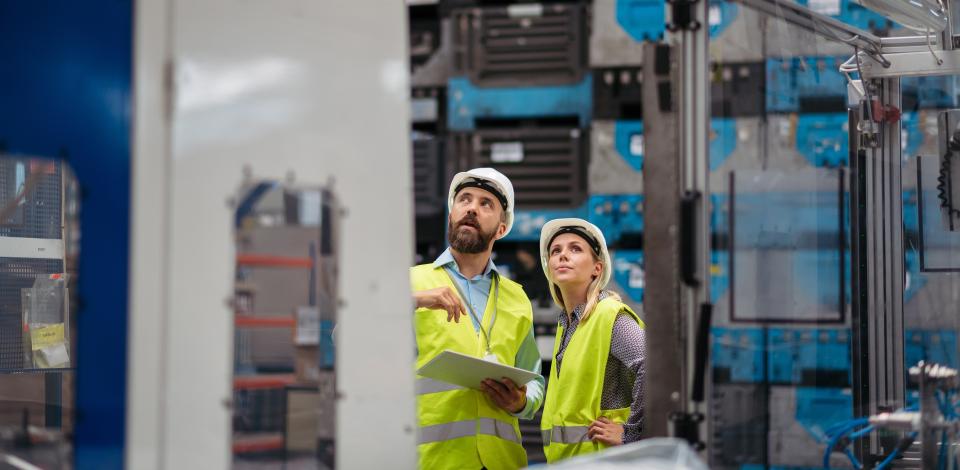
Manufacturing is a key driver of economic activity. However, with increased expenses comes the need for creative solutions, particularly amid fierce industry competition. The most successful cost-cutting measures account for many sources of waste — leveraging well-rounded, data-driven strategies to address core financial challenges without affecting throughput or quality. It can prove a complicated balance to strike but tried-and-tested strategies promise impressive results.
Discover how to reduce manufacturing costs while prioritizing innovation and customer satisfaction.
Why Manufacturing Cost Reduction is More Critical Than Ever
According to the National Institute of Standards and Technology (NIST), the United States manufacturing industry adds $2.69 to the economy for every $1 spent. Increasingly, though, this economic generation is hampered by rising costs that leave enterprises with fewer resources to scale their operations or commit to innovation. Manufacturers today face rising costs due to inflation and general market volatility. Materials are more expensive, as are the labor and energy needed to turn them into finished products. Meanwhile, unpredictable supply chains make it difficult to bargain for favorable pricing.
Strategic cost-cutting measures enable enterprises to do more with less. This limits waste while improving resilience, empowering enterprises to adapt as industry conditions continue to evolve. Through efficient processes and waste minimization strategies, businesses can absorb frequent cost fluctuations without compromising their bottom line.
1: Lean Manufacturing and Waste Elimination
Lean manufacturing aims to minimize waste while also enhancing customer value. This involves the systematic elimination of activities that do not add value. Lean manufacturers map value streams to visualize core processes and identify bottlenecks. This effort reveals where labor or materials are used inefficiently. From there, they redesign processes to limit delays while dedicating all resources toward value-adding activities.
Lean methods yield significant savings by increasing equipment longevity alongside fewer costly repairs or replacements. This decreases labor costs as well, as streamlined workflows minimize downtime and rework. By optimizing space, lean methods prevent costly facility expansions while limiting cycle times thanks to shorter travel distances.
2: Leverage Six Sigma to Reduce Defects and Rework
A prominent management methodology known as Six Sigma prioritizes consistency. This brings a structured approach to limiting variability. A centerpiece of Six Sigma involves the DMAIC (define, measure, analyze, improve, control) framework. DMAIC helps identify and address key sources of process variation. This process prevents defects and ultimately rework by systematically reducing fluctuations.
Lean Six Sigma combines the efficiency of lean manufacturing with the consistency of Six Sigma. In practice, this involves streamlining workflows while strengthening process performance to keep outputs predictable.
3: Adopt Smart Manufacturing and Automation
Smart manufacturing uses advanced machinery and real-time data to boost efficiency and accuracy. This draws from a few core elements to expedite everyday industrial processes:
- Connectivity. Smart manufacturing begins with a fully connected, internet-enabled environment, in which all devices and machines can communicate with one another. This forms the reliable digital backbone that underscores all technological advancements, including artificial intelligence (AI)-powered solutions and robotics.
- Internet of Things (IoT) integrations. Coordinated systems of sensors allow manufacturers to gather and share data in real time. These devices detail equipment performance and inventory locations but can also provide environmental information about temperature or humidity.
- Data analytics. Determining how manufacturers make the most of raw data, analytics bring a structured approach to understanding industrial trends and patterns. These systems identify bottlenecks, forecast inventory needs, and track energy usage.
- Robotics. Supported by data-driven insights, automated solutions tackle repetitive tasks. Automated guided vehicles (AGVs) and autonomous mobile robots (AMRs) efficiently move materials between workstations, while automated storage and retrieval systems (AS/RS) handle high-volume retrieval and put-away processes.
4: Implement Preventive and Predictive Maintenance
Today's data-driven solutions support predictive maintenance, which replaces reactive fixes with proactive interventions that account for early signs of wear. Sensors detect unusual vibrations or overheating in conveyors and forklifts. This triggers maintenance teams, which can respond during planned downtime. Predictive strategies prevent breakdowns and outages by addressing early concerns, in turn extending the life of expensive machinery.
5: Optimize Supply Chain and Procurement
Supply chain disruptions force manufacturers to pay more for difficult-to-obtain materials, while rerouting and volatile fuel prices increase freight expenses. Manufacturers may seek to avoid these problems by increasing buffer inventory — yet this, too, can carry added expenses, like higher carrying costs as well as potential losses due to obsolescence. If supply chains lead to missing components, downtime introduces costs of its own, causing production to stall even as overhead continues to increase.
Supplier relationships determine resilience amid supply chain challenges. These should be diversified to limit dependence on specific suppliers. Geographic diversification accounts for geopolitical conflicts and extreme weather events, along with fluctuating tariffs. Many manufacturers intentionally place production near end markets to reduce transportation costs. Others opt for collaborative solutions such as vendor‑managed inventory (VMI), where suppliers are responsible for managing vendors' inventory.
6: Strategic Inventory Management
Inventory management determines how stock is tracked as it moves within factory environments. This is often framed as a day-to-day operational effort, but emerging technologies allow manufacturers to take a big-picture approach. For example, AI-backed solutions and Internet of Things sensors improve visibility by detailing item locations and quantities in real time.
Strategic, tech-enabled inventory management allows for predictive adjustments. This can spark changes in supply amid seasonal surges in demand or shifts in material usage. Manufacturers that anticipate these changes can take steps to prevent shortages while also limiting the costs of excess inventory.
7: Optimize Energy Use
Energy is an often-overlooked source of financial and environmental waste. According to the U.S. Energy Information Administration, the industrial sector accounts for one-third of total energy consumption, and manufacturing constitutes three-quarters of industrial energy consumption. A substantial share of this energy is wasted, however, prompting high fuel costs and compromising sustainability. Energy-related cost-cutting opportunities include:
- Lighting. In their book Warehousing 5.0, experts Eric Grosse and Christoph Glock assert that lighting accounts for nearly two-thirds of overall energy demand in industrial facilities. While many factories and warehouses have already shifted to LEDs, additional energy savings can be achieved through smart lighting systems. Sensor-based lighting, for instance, ensures that lights are only activated when motion is detected. Meanwhile, indoor positioning systems (IPS) map worker and equipment movement so that spaces are illuminated based on where activity actually occurs.
- Heating and cooling. Climate control can have a direct impact on product quality, especially as many items are vulnerable to spoilage. This also influences equipment performance and worker productivity. Unfortunately, heating, ventilation, and air conditioning (HVAC) systems can prove inefficient within vast, open manufacturing spaces. Building management systems (BMS) adjust HVAC based on time of day and facility usage, while demand-based ventilation further adjusts to real-time needs.
- Forklifts. Industrial spaces rely on forklifts for transporting and stacking pallets and heavy items, but heavy lifting demands a high-power output. This is further exacerbated by frequent acceleration and braking due to sharp turns and the general stop-and-go nature of forklift movement. Electric forklifts can limit reliance on fuel, even using regenerative braking to recapture power.
Additionally, optimizing energy output offers the added benefit of sustainable production, a core value for many manufacturers and their customers today.
8: Outsource Support Functions
Due to rising labor costs and high administrative overhead, many manufacturers now outsource solutions to streamline diverse functions without expanding internal headcount. Outsourced solutions limit capital investments, allowing manufacturers to bypass costly investments in physical space, machinery, or even software. This reinforces the power of specialization, too, so manufacturers may focus on core competencies as outsourced providers tackle complex functions. This deep domain expertise could prove expensive and time-consuming to build internally — but through outsourcing, manufacturers maintain access to scalable solutions and advanced expertise.
9: Invest in Workforce Development and Leadership
As manufacturers shift to smart strategies, human employees' responsibilities are poised to pivot away from manual material handling and assembly toward tech oversight. These skilled professionals will be expected to monitor and interpret sensor data while managing complex, AI-powered workflows.
Strategic hiring will become even more important as demand for technical skills increases, but manufacturers must also commit to continuous learning via workforce training. Although training programs require investment, the returns can be considerable as businesses retain talent and help current employees work efficiently alongside advanced technologies.
10: Use Data and KPIs to Drive Continuous Improvement
Data is at the heart of contemporary manufacturing improvements. This is what enables manufacturers to understand the root causes behind common obstacles while anticipating future concerns. IoT supports a continuous flow of data, using real-time insights to optimize inventory management, equipment performance, and energy usage.
This shift to data-driven strategies does not necessitate a full or immediate overhaul. This effort can begin by identifying a concrete challenge or source of waste, then implementing IoT sensors to gather the most relevant information.
Manufacturing execution systems (MES) and enterprise resource planning (ERP) support data-driven manufacturing by centralizing production line and inventory information. Manufacturers use these tools to track performance across lines or facilities. Sensors, analytics, and centralized solutions confirm the impact of process changes, thereby feeding ongoing cycles of monitoring and optimization.
11: Rationalize Your Product Line
Amid compelling technological developments, mission-driven manufacturing remains critical. This influences branding and market positioning by improving awareness ,customer satisfaction, and loyalty. All products should be relevant to the overarching organizational vision and values. Operational challenges must be considered, too, including chronic material shortages or high scrap rates.
Rationalizing draws attention to the big picture of manufacturing while revealing how individual products and practices contribute to overall profitability and strategic focus. This means using data to determine which products pull their weight versus which may introduce excessive costs or strain.
Learn to Lead Cost-Efficient Manufacturing Operations
Uncover opportunities to support manufacturing cost reduction through creative, data-driven strategies. Georgia Tech’s Online Professional Master’s in Manufacturing Leadership (PMML) delves into solutions for elevating cost efficiency and sustainability simultaneously. The PMML program’s curriculum supports manufacturing-focused skill development and can accelerate your journey to gaining a Lean Six Sigma Black Belt certification. Get in touch today to learn more.
Digital Producer: Kat Bell

Becoming a Business Analyst: What You Need to Know