The Mid-Year Check-In: Are You Keeping Pace With Change?
The middle of the year provides a chance to evaluate changing workplace demands, identify skill gaps, and prepare for what's next.

January is often treated as the time for reinvention — professionally and personally. Goals are set, decisions are made, and calendars are filled with plans.
But if the first half of 2026 has demonstrated anything — with increased disruption in job markets and in the day-to-day functions of the workplace — it’s that change doesn’t always follow your schedule. Instead of asking yourself if you’re on your way to accomplishing the goals you set at the beginning of the year, a better question may be whether those goals still reflect your needs today.
As artificial intelligence continues to impact workflows across industries, and cybersecurity concerns are evolving alongside new technologies, professionals and their organizations are having to adapt faster than ever before.
So where does this leave you?
Take Stock of Where You Are
The midpoint of the year offers something that January doesn’t: perspective.
By now, you’ve had six months of real-world experience to reveal which trends matter, what skills are valuable, and where new opportunities for you may be emerging. This insight is more powerful than any New Year’s resolution.
For Jennifer Wooley, academic programs and student services director for the College of Lifetime Learning, a curiosity mindset has opened doors to new opportunities throughout her career.
"I’m naturally inclined to ask 'why,' to want to understand more, and to get below the surface of how things work," she says. "That curiosity has shaped many of my choices. It’s what’s given me the confidence to raise my hand for new projects, get involved in initiatives outside my immediate role, and build connections beyond my own department or group."
Some questions you might ask yourself include:
- What has changed in my field since January?
- What skills are becoming increasingly important in my day-to-day work?
- Have any knowledge gaps become more visible to me?
- What new knowledge will arm me for success over the next few months and years?
These answers will look different for everyone. For some, focusing on ways AI can increase productivity can be beneficial. For others, gaining leadership or project management skills, strengthening cybersecurity awareness, or learning how to use data to make more informed decisions can be helpful.
The common thread, however, is a willingness to keep learning — and learning doesn’t always require a major career change or a return to a traditional degree program. That willingness to explore new ideas and experiences can have benefits beyond professional advancement.
"Being curious has also helped me learn what genuinely excites me, and just as importantly, what doesn’t," Wooley explains. "While every role requires balance, I try to lean into opportunities that spark new energy, learning, and experiences. That’s what keeps me growing and engaged over time."
Often, it begins with an investment in a specific skill area by taking a class or earning a certificate. Over time, those smaller learning opportunities can compound, giving you greater confidence and helping you gain the ability to navigate change more effectively.
Professionals who thrive in evolving industries don’t know everything about all aspects of their workplace, but they are the ones who remain curious about coming trends and are willing to learn more about them.
Skills Worth Watching in the Second Half of 2026
As you re-examine your yearly goals, it can be helpful to focus on skills and capabilities that are shaping the future of work. With tools and technology continuing to evolve, several areas are emerging as valuable across all career stages and industries:
AI Literacy
AI is becoming part of everyday work regardless of industry or role. Professionals don’t need to become AI engineers, but they do need to understand how AI tools work, where they can add value, and how to use them responsibly.
Cybersecurity Awareness
From executives to project managers, professionals across organizations are expected to protect sensitive data and recognize potential risks.
Data-Informed Decision Making
Professionals need the ability to review data, interpret it, ask the right questions, and translate it into actionable work to give their workplaces a competitive advantage.
Project and Change Management
As organizations continue to navigate new technologies and priorities, workforce expectations evolve — and professionals who can lead projects, manage stakeholders, and guide teams through change are vital.
Human-Centered Leadership
As automation expands, uniquely human skills become even more valuable. Communication, empathy, collaboration, coaching and critical thinking are essential for building strong teams and positive workplace cultures.
Looking Ahead
No one can predict what the workplace will look like a year from now, but one thing remains clear: the pace of change is unlikely to slow. New tech will continue to emerge, industries will change, and organizations will need people who can adapt and thrive.
"To me, change is inevitable, but it is also something that can be planned and managed. Change is essential to progress and accomplishing your goals. It can be daunting and scary, but also rewarding. Chaos, on the other hand, is not," says DeMarco Williams, a project manager with the College of Lifetime Learning. "When I think about professionals who successfully adapt to change, I think of people who are receptive to the possibility that a different way could mean progress."
Staying relevant in the workplace doesn’t require mastering every trend — it means committing to continuous growth and being open to developing new skills as opportunities and challenges arise.
"I believe that every person is capable of change, even if it’s just a tiny bit. For those who struggle to adapt, I think their challenge is to break down change into manageable pieces, compared to those who are quick to embrace it," Williams says.
As you look ahead, determine where a small investment in learning could have the greatest impact and consider expanding your knowledge in that area. Whether it’s gaining technical expertise, developing leadership skills or exploring a merging field, the actions you take today can help position you for what’s next.
The future of work is being shaped every day, and there is still plenty of time to be a part of it.
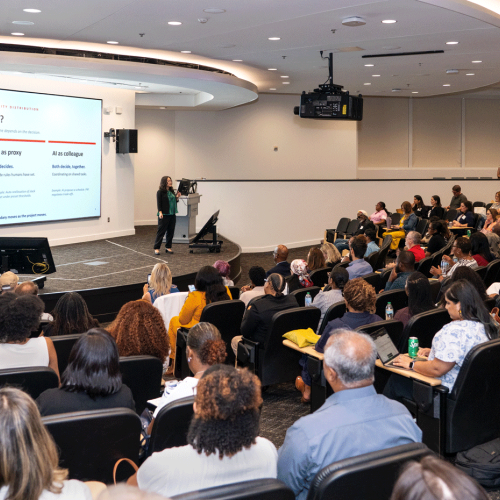
AI’s Role in Project Management