EHS Specialist: Career Overview
Explore the role of an environmental health and safety (EHS) specialist, key skills, industries, career outlooks, and more.

Hardworking teams across diverse industries develop products, services, and innovations that shape how we live and work. With this progress comes the responsibility to protect the individuals who support forward-thinking initiatives and the settings in which they operate.
Addressing the realities of operating safely in today’s risk-filled environments, environmental health and safety brings structure to that responsibility. This discipline integrates two priorities: protecting workers and limiting environmental harm. Environmental health and safety specialists support this effort by guiding organizations towards safe and durable practices.
What Is an EHS Specialist?
An Environmental Health and Safety (EHS) Specialist is the professional responsible for integrating environmental, health, and workplace safety principles into organizational operations. Rather than focusing solely on compliance, EHS specialists evaluate risk across systems, processes, and work environments to help organizations prevent incidents, meet regulatory obligations, and support long-term safety performance.
In many organizations, EHS specialists operate at the intersection of technical safety knowledge, regulatory interpretation, and operational decision-making. They collaborate with leadership, operations teams, and regulatory bodies to translate safety standards into practical policies and programs that align with business goals and workforce needs.
Within the broader field of occupational safety and health, the EHS specialist role often serves as a foundation for advanced responsibilities in safety management, environmental compliance, and risk leadership.
What Does an EHS Specialist Do?
EHS specialists provide oversight, guidance, and accountability for organizations that seek to improve safety, sustainability, and overall compliance. The U.S. Department of Energy explains that these professionals work to "eliminate fatalities, injuries, occupational illnesses, property damage, and environmental harm."
EHS specialists may work within specific facilities or regions to confirm adherence to safety and sustainability policies. Others work at the corporate level to guide policy development and create compliance programs. Consulting roles are common, too, with many EHS specialists advising different clients on targeted health, safety, or sustainability measures. Other key responsibilities include:
- Conduct safety inspections and audits. EHS specialists uncover concerns through in-depth safety inspections. Their consistent oversight confirms whether industry-specific controls, equipment, or work practices meet safety standards.
- Develop and enforce safety policies and procedures. EHS specialists guide preventative strategies by recommending or implementing policies that address identified hazards. These procedures may set expectations surrounding equipment use or chemical handling. Inspections and documentation support enforcement, creating accountability to ensure that relevant parties follow through on environmental and safety recommendations.
- Train employees on safety protocols. EHS specialists develop training materials and guide training sessions, promoting not only hazard awareness but also practical skills that help employees prevent or respond to workplace risks.
- Investigate incidents and recommend corrective actions. While EHS prioritizes prevention, specialists may need to investigate any incidents that do occur. These incidents may signal broader problems that need to be addressed, so EHS specialists work to understand root causes or contributing factors. They also recommend corrective actions that help organizations prevent similar problems in the future.
“EHS specialists manage a wide range of occupational health, safety, and environmental compliance-related requirements, and as such, they have to know about a lot of different things, but may not be an expert in any one area,” says Jenny Houlroyd, safety and health instructor and occupational health group manager with Safety, Health, and Environmental Services (SHEs) at Georgia Tech. “The beauty of this role is that they are trained to know when a company needs to hire an expert to solve a problem. Knowing who to call and when is what makes them so important to protecting worker safety and health.”
Industries That Employ EHS Specialists
EHS spans numerous industries, and specialists tailor their approach to reflect sector-specific concerns. Within these contexts, they may work in-house or serve as consultants. The following are fields that seek guidance from EHS specialists:
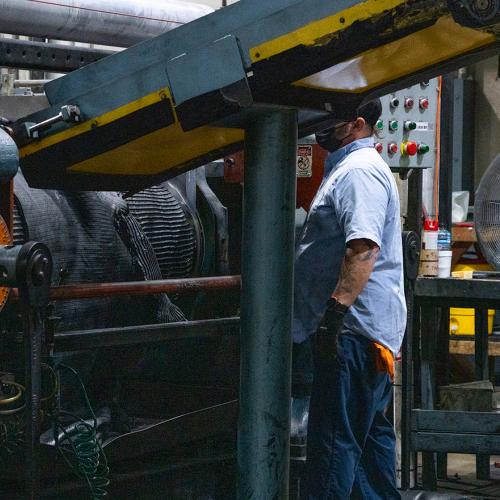
- Manufacturing and industrial facilities. The manufacturing industry presents a range of hazards, such as chemical exposures or electrical hazards. EHS specialists monitor for these issues by conducting safety audits and verifying compliance with Occupational Safety and Health Administration (OSHA) regulations. Additionally, they support safe production environments via hazardous waste management and physical barrier systems known as machine guarding.
- Construction and infrastructure. Monitoring fast-paced, high-risk construction settings, EHS specialists perform site inspections to confirm compliance across multiple construction sites. They address multiple sources of risk, prioritizing fall prevention, excavation control, and electrical safety. Specialists may help contractors develop industry-specific safety programs or provide training for laborers while lending support to safety officers.
- Healthcare and laboratories. Addressing healthcare-specific risks like infection and biosafety, EHS specialists support diverse professionals within clinics and hospitals. They encourage compliance with strict regulations related to radiation exposure, bloodborne pathogens, and various other healthcare hazards. Their work protects clinical professionals as well as patients and the broader community.
- Energy and utilities. EHS specialists support safe energy production by conducting in-depth inspections to verify that equipment is properly managed and maintained. They monitor environmental stressors that could potentially impact workers and community members alike. Industry-specific protections may relate to electrocution and arc flash events as EHS specialists coordinate training and strengthen emergency response readiness.
- Corporate and office-based organizations. In the corporate sector, EHS specialists advocate for ergonomics programs and indoor air quality assessments. They acknowledge that seemingly low-hazard settings can still be prone to risks and, therefore, require consistent inspections and a strong safety culture.
- Government and regulatory agencies. State and federal government agencies rely on EHS specialists for regulatory enforcement and program oversight. In addition, these professionals inspect and oversee the offices or field stations in which government professionals work.
Skills Needed to Succeed as an EHS Specialist
EHS specialists rely on a combination of technical expertise and professional skills to manage risk, support compliance, and influence safety outcomes. While knowledge of occupational safety, environmental health, and regulations is essential, success in the role also depends on the ability to analyze information, communicate risk clearly, and adapt to changing workplace conditions. Key skills include:
- Attention to detail and hazard recognition. EHS specialists must identify subtle signs of occupational or environmental risk during inspections, audits, and monitoring activities. This includes recognizing early indicators of equipment failure, unsafe practices, or exposure concerns, as well as interpreting data from logs, sensors, and other monitoring systems.
- Critical thinking and risk assessment. Beyond identifying hazards, EHS specialists evaluate root causes, assess risk severity, and determine appropriate control measures. This often involves reviewing incident data, conducting job hazard analyses, and applying systems thinking to recommend practical, effective solutions.
- Technical and regulatory communication. Communicating safety expectations requires translating regulatory requirements and technical findings into clear, actionable guidance. EHS specialists prepare policies, reports, and training materials and present recommendations supported by data and regulatory standards.
- Adaptability and technical fluency. As regulations and technologies evolve, EHS specialists must remain current with new tools and approaches. Many roles now involve EHS management systems, data analytics, and emerging technologies such as AI-enabled monitoring or reporting platforms.
- Regulatory knowledge and compliance expertise. A strong understanding of occupational safety and environmental regulations allows EHS specialists to develop and maintain compliance programs aligned with legal requirements and industry best practices.
EHS Specialist Salary and Job Outlook
The U.S. Bureau of Labor Statistics (BLS) offers insight into job outlook and salaries within the category "occupational health and safety specialists and technicians." These roles show an anticipated growth rate of 12% between 2024 and 2034. In 2024, occupational health and safety specialists earned median wages of $83,910 per year.
The BLS Occupational Outlook Handbook cites "adoption of new technologies" and accompanying updates in safety practices as among the most significant trends contributing to strong demand and wage growth.
Promote Environmental Health and Workplace Safety With Georgia Tech
Make a positive impact and advocate for safe and sustainable workplace practices. Georgia Tech's Professional Master's in Occupational Safety and Health (PMOSH) empowers you to unleash impactful health and safety initiatives. Learn more today about how the PMOSH program can help you elevate your safety and health career.

What Is Machine Learning?